
The first step after a storm isn’t cleanup. It’s making sure people are safe and stopping damage from spreading. If wind or rain has affected your home, it can be hard to know what’s safe to handle, what needs professional mitigation, and what to document for insurance. This guide to storm damage cleanup Vancouver WA property owners can use explains how to take those first steps and protect your property.
Stay clear of hazards and areas that may be unsafe to approach. From a safe location, document visible damage and contact your insurer. Prompt mitigation can help limit further damage, but cleanup and repairs are different stages. A restoration team can assess affected areas and address storm-related water or debris while you focus on immediate decisions.
Below, you’ll learn what to do first, what professional storm cleanup involves, and how documentation fits into the insurance process. Droplet Restoration provides 24/7 emergency storm damage restoration in Vancouver and nearby communities. Its IICRC-certified technicians respond within 90 minutes to mitigate damage and begin recovery, and the team works directly with insurance providers to streamline claims. Understanding the process can help you decide what to do next.
Key Takeaways
- With storm damage cleanup Vancouver WA, separate urgent hazards and active damage from issues that can wait.
- Assessment, mitigation, and cleanup are parts of the response; they are distinct from later restoration work.
- Compare response access, technician credentials, damage assessment, and insurance coordination when reviewing a cleanup approach.
- Protect people, stay clear of downed wires and unstable areas, and document visible damage from a safe distance.
- Use a clear sequence: prioritize safety, document what you can, then arrange professional mitigation.
Storm Damage Cleanup in Vancouver, WA: What Needs Attention First?
Storm damage can disrupt your home quickly, and the first look may leave you unsure where to begin. Take a safety-first approach: identify immediate danger, look for active water entry from a safe location, and leave unstable areas alone. In Vancouver and nearby communities, wind, rain, flooding, and fallen branches can affect different parts of a property. The right cleanup response depends on what happened and whether the damage is ongoing.
Storm damage cleanup involves assessing affected areas, mitigating active damage, and handling storm-related debris so the property can move toward recovery. The work may differ depending on whether the issue is water intrusion, wind damage, or fallen materials. A general overview of Disaster Restoration also explains how restoration can involve several kinds of property damage.
Which storm impacts can affect a Vancouver-area property?
Wind can loosen or damage shingles and other exterior components. Rain may enter through roof or wall openings, while flooding can affect ground-level areas. Fallen branches or trees can damage roofs, siding, and other parts of a property. The visible mark may not show how far water has traveled, so an assessment can help identify affected areas beyond the first stain or puddle.
When should you treat storm damage as an emergency?
Prioritize immediate danger, active water entry, and damage that appears to be worsening. Keep people away from downed wires, unstable structures, and other apparent hazards. Don’t enter an area that looks unsafe to inspect it. Follow instructions from emergency responders. If there’s no immediate threat but damage remains, a professional assessment can help identify what needs prompt mitigation and what can wait.
Match the first response to the type of damage. A roof opening needs attention to ongoing water entry; standing water calls for a different mitigation approach than scattered branches. Flooding may affect more than the visible surface, while wind damage can leave exterior materials loose or expose areas to rain. Identifying the source and spread helps direct the response.
- Active leak: Keep clear of unsafe areas and arrange an assessment to address ongoing water entry.
- Water intrusion: Note where water is visible, but don’t assume that’s the full affected area.
- Wind or fallen-tree damage: Avoid unstable sections and leave hazardous debris undisturbed until it can be assessed safely.
Cleanup and later repair decisions are separate stages. The immediate goal is to understand the damage and limit additional harm through appropriate mitigation. Structural concerns and active hazards take priority over cosmetic damage that isn’t changing. For storm damage cleanup Vancouver WA property owners should first focus on safety, then identify active problems and the response each one needs.
How Professional Storm Damage Cleanup Limits Further Damage
Once immediate hazards are clear, the response shifts to controlling damage. Storm cleanup actions depend on the type and extent of the damage. A roof opening letting in rain calls for a different priority than water already inside or debris in an accessible area. Matching the action to the problem focuses effort where damage is active, rather than assuming every property needs the same steps.
Mitigation addresses immediate conditions that could cause more harm. Cleanup covers tasks such as removing storm-related debris and responding to water that entered the property. Restoration is the broader recovery process. These stages can overlap, but they aren’t interchangeable: removing debris alone won’t address water intrusion, and mitigation doesn’t mean every later repair is complete.
What happens during the initial assessment?
Technicians review visible storm impacts, identify areas that may be affected, and set immediate priorities. If rain entered through a damaged exterior, the assessment focuses on where water is present and whether entry is ongoing. Droplet Restoration’s IICRC-certified technicians bring relevant training to this evaluation. The assessment guides decisions based on observed conditions, rather than assuming damage stops where it’s easiest to see.
When water enters a home, water removal and drying may be appropriate depending on the affected areas and conditions. Prompt mitigation can help limit ongoing damage, though the necessary work depends on the situation. A clear assessment helps determine which steps address the immediate problem and which decisions belong later in recovery.
How do cleanup and mitigation differ from repairs?
Cleanup and mitigation address immediate storm impacts and support recovery. Later repair decisions are separate. This restoration response covers cleanup and mitigation, not reconstruction or unrelated remodeling. Keeping those stages distinct helps property owners understand what a cleanup team is addressing now without assuming mitigation includes every later repair.
For storm damage cleanup Vancouver WA residents can use, connect the observed damage to the next action:
- Water inside: Assess affected areas and determine whether water removal or drying is appropriate.
- Continuing entry: Prioritize the active source of damage and mitigation needs.
- Storm debris: Address debris-related cleanup while keeping clear of unsafe materials or areas.
Droplet Restoration works directly with insurance providers to help streamline claims communication as the response moves forward. If storm impacts need assessment and mitigation, Droplet’s storm damage restoration team can help organize the cleanup response.
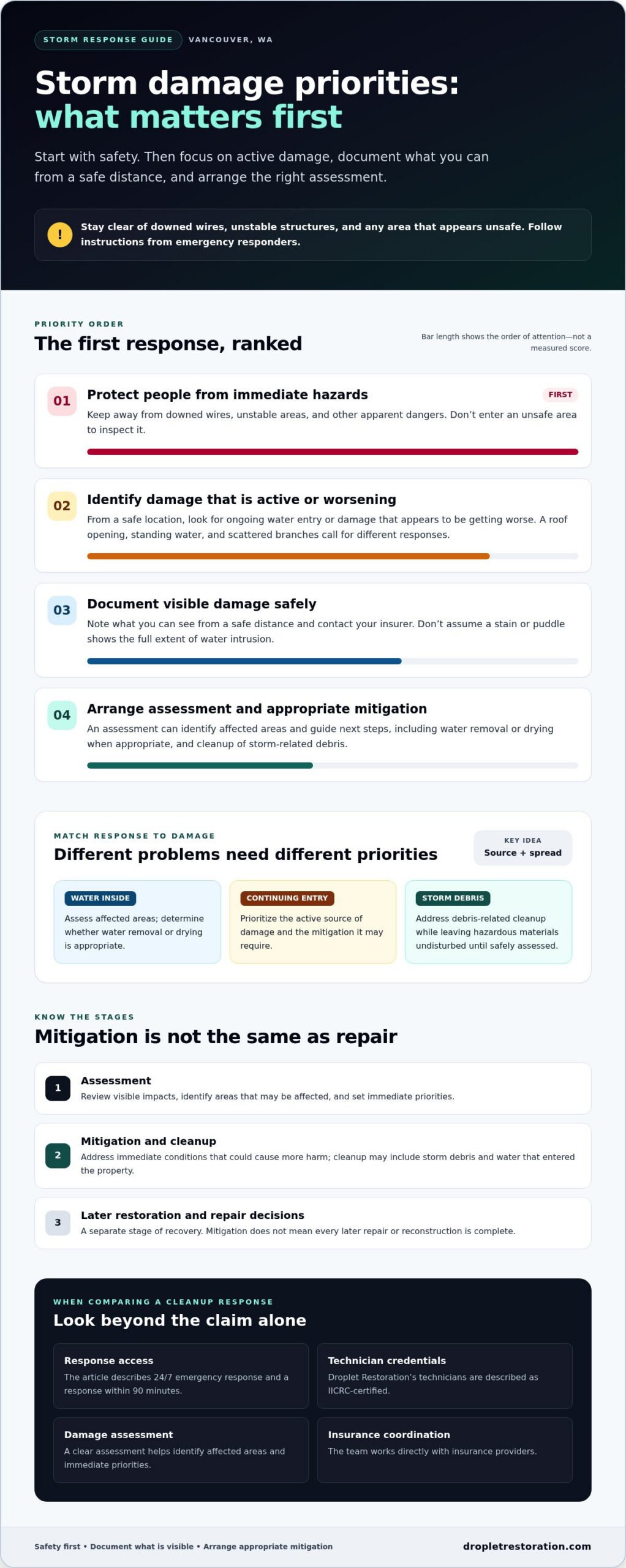
Choosing Storm Damage Cleanup in Vancouver: Compare the Response, Not Just the Claim
A clear storm cleanup response should explain what needs attention first, how affected areas will be assessed, and how updates will be shared. Compare the response rather than relying on a fast claim or broad promise. For storm damage cleanup Vancouver WA property owners need, practical answers help clarify what happens next while keeping expectations grounded in the observed damage.
What should a storm cleanup response make clear?
Look for an explanation of immediate mitigation priorities and communication. The team should describe what it observed, which issues need attention first, and how it will keep you informed as the response progresses. Document visible damage from a safe location, but don’t enter unstable areas or approach hazards for a better view.
| What to compare | What a clear response includes | Droplet Restoration |
|---|---|---|
| Response access | How to reach the team when storm damage needs urgent attention. | Provides 24/7 emergency storm damage restoration. |
| Technician credentials | Relevant qualifications explained without promising a specific result. | Uses IICRC-certified technicians. |
| Damage assessment | Identifies visible impacts, affected areas, and immediate priorities. | Technicians respond within 90 minutes to mitigate damage and begin recovery. This describes response timing, not a guaranteed arrival time. |
| Insurance coordination | Clarifies how damage information and claim communication fit into cleanup. | Works directly with all insurance providers to streamline claims. |
These points help you judge whether the response has a practical sequence: assess conditions, identify mitigation needs, and communicate what comes next. Credentials describe the team’s training, while assessment details show which work is being prioritized. Neither guarantees a particular outcome. The response depends on the damage and conditions at the property.
How does insurance coordination fit into cleanup?
Keep a record of visible damage when it’s safe to do so. Photos and notes can document what you observed, but they don’t determine whether a policy covers a loss or what reimbursement may apply. Droplet works directly with all insurance providers to streamline claims communication and connect information about the damage with the cleanup response.
If stormwater has entered the property, note where water is visible and when you observed it, without entering unsafe areas. This can support clear communication about the damage and mitigation underway. For Vancouver-area property owners, Droplet’s emergency storm response includes round-the-clock access, certified technicians, and insurance coordination. Explore Droplet’s storm damage response.
What Vancouver Property Owners Can Do Before Cleanup Begins
While cleanup is being arranged, focus on protecting people and giving the restoration team a clear starting point. You don’t need to investigate the damage yourself. Follow this sequence, and stop if the property or surrounding area feels unsafe.
- Protect people. Move household members and pets away from affected areas. Follow directions from emergency responders and keep others clear if they identify a danger.
- Avoid hazards. Don’t approach downed wires, unstable structures, damaged ceilings, or areas with active water exposure. Don’t enter a space to retrieve belongings or inspect damage if conditions may be unsafe.
- Document from a safe location. If you can do so without approaching a hazard, photograph visible damage and note when you first observed it. Include the affected room or area and any visible change, such as water continuing to enter.
- Arrange professional help. Share what you observed so the cleanup team can understand the situation and prioritize an assessment. DIY efforts shouldn’t replace a professional evaluation of storm damage.
Which immediate actions are safe for property owners?
Stay in a safe area and let emergency responders direct urgent safety decisions. Avoid touching electrical equipment or walking through standing water, especially if there may be an electrical hazard. If a structure appears unstable, keep your distance instead of trying to secure or inspect it. The goal is to protect people, not to begin cleanup before conditions have been assessed.
What information helps the cleanup response?
Brief, factual notes can help explain what the team will find. Record which rooms or areas appear affected, what damage is visible, and whether water entry seems ongoing. Take photos only from a safe position. Don’t guess at hidden damage or assume what an insurance policy covers or which documents a claim requires. Share what you observed and let the assessment guide the next steps.
These actions help make storm damage cleanup Vancouver WA property owners arrange more orderly, without putting anyone at risk to gather extra details. For broader preparation guidance, refer to the existing what-to-do-after-storm-damage guide as you plan what to do next.
If you’re ready to arrange a professional assessment, contact Droplet Restoration for storm damage cleanup.
Get Storm Damage Cleanup in Vancouver, WA With a Clear Next Step
After storm damage, keep the next move simple: protect people, identify active damage from a safe location, then arrange professional mitigation. You don’t need to determine the full scope on your own. A clear description of what you’ve observed can help focus the response on immediate conditions and the steps needed to begin recovery.
What to expect when you contact Droplet Restoration
Droplet Restoration provides 24/7 emergency storm damage restoration in Vancouver, Washington, and nearby communities. The response begins with understanding what happened, which areas appear affected, and whether damage is still active. IICRC-certified technicians respond within 90 minutes to mitigate damage and begin recovery. This describes response timing, not a guaranteed arrival time.
Droplet works directly with all insurance providers to streamline claims communication. That coordination can connect information about the damage with the restoration response, but it doesn’t determine policy coverage or guarantee reimbursement. Keep notes about what you observed and share them with the team.
If water entered the property, mention where you saw it and whether it appeared to be continuing. If wind or fallen debris caused damage, describe the visible impact without entering an unsafe area. These details provide a useful starting point while the property is assessed and mitigation needs are identified.
Who does Droplet serve near Vancouver?
Droplet serves Vancouver and nearby communities, including Battle Ground, Camas, Ridgefield, and La Center. Service communities also include Longview, Kelso, Woodland, Castle Rock, and Kalama. If storm damage has affected your property, share its location and the immediate conditions so the response can be directed to the situation.
Act on what’s urgent, leave unsafe areas alone, and arrange professional help for damage that needs attention. Request storm damage cleanup from Droplet Restoration to begin the response.
Take the Next Step Toward Recovery
After a storm, uncertainty can linger even once immediate danger has passed. You may be weighing what to handle first, what needs a professional assessment, and how to keep recovery organized. You don’t have to resolve every question before taking the next step. Start with the condition that is changing or causing concern, and share what you can safely observe.
Choosing storm damage cleanup Vancouver WA support can help move you from uncertainty toward a clear response. A focused conversation can establish what happened and where professional mitigation may be needed. Keep people clear of unsafe areas while help is arranged, and let the property’s actual conditions guide the work.
When you’re ready to discuss the damage, get help with storm damage cleanup from Droplet Restoration.
Frequently Asked Questions
What does storm damage cleanup include?
Storm damage cleanup can include assessing affected areas, mitigating active damage, and cleaning up storm-related debris. The response depends on the damage. Water entering a home may need different attention than scattered branches. Initial mitigation addresses immediate conditions; later restoration decisions are separate, and cleanup doesn’t automatically include reconstruction.
How quickly should I call for storm damage cleanup in Vancouver, WA?
Arrange help promptly if damage is active, worsening, or unsafe. Early mitigation can address ongoing damage, though it can’t guarantee a specific result. Droplet Restoration offers 24/7 emergency service, and its IICRC-certified technicians respond within 90 minutes to mitigate damage and begin recovery. This is response timing, not a guaranteed arrival time.
Does homeowners insurance cover storm damage cleanup?
Coverage depends on your policy and the circumstances, so your insurer determines what applies. If safe, photograph visible damage and note when you observed it. Droplet Restoration works directly with insurance providers to streamline claims, but coordination doesn’t guarantee approval or reimbursement.
Can I clean up storm damage myself?
Minor, accessible debris may seem manageable, but don’t approach downed wires, unstable structures, or active water hazards. Avoid entering damaged areas to inspect them or retrieve belongings. If damage is substantial, ongoing, or uncertain, arrange a professional assessment. DIY cleanup doesn’t replace evaluating conditions that may need professional mitigation.
What should I do if a storm causes a roof leak?
Stay clear of areas with structural or electrical concerns, and don’t climb onto the roof. From a safe location, note where water is entering and photograph visible damage. Active water intrusion may need prompt mitigation. Share your observations with the cleanup team and insurer without assuming what your policy covers.
Does Droplet Restoration serve areas near Vancouver, WA?
Yes. Droplet Restoration serves Vancouver and nearby communities, including Battle Ground, Camas, Ridgefield, La Center, Longview, Kelso, Woodland, Castle Rock, and Kalama. If storm damage affects your property in one of these areas, share its location and a brief description when arranging cleanup.